16 Sep 2026
Bring employees back to a modern workplace
The return to office conversation has moved on. For most workplace, HR, and facilities leaders in 2026, the question is no longer whether employees will come back, but how to make the office somewhere they actually want to be.
RTO, short for return to office, describes employees shifting back into physical workspaces after years of remote and hybrid arrangements. The organizations getting it right are not simply issuing mandates. They are modernizing the office into an engaging, productive, and user-friendly environment that earns the commute.
That distinction is critical. According to BambooHR research, 47% of employers alongside 42% of employees report that their current workplaces lack proper hybrid support. Friction like searching for a desk, struggling to reserve a meeting room, or having trouble finding teammates quickly turns the return into an unwelcome hassle. By implementing an effective workplace management platform, companies can streamline daily interactions and deliver a seamless office experience. This guide explores what a successful RTO looks like in 2026, explains why traditional mandates fall short, and shows how smart workplace management transforms mandatory attendance into a compelling draw.
Quickly jump to:
- The state of return to office
- Why return-to-office mandates backfire
- How to return people back to the office
- How workplace technology powers a modern return to office
- Measuring whether your return to office is working
- Make your return to office worth the commute
- Return to Office FAQs
TL;DR
- The return-to-office conversation in 2026 isn’t really about if people come back. It’s about making the office worth the commute.
- Hybrid is the norm. Most remote-capable employees are still hybrid, with many companies asking for around three days in the office.
- Tuesday to Thursday are busy days. Offices can be half-empty at the start and end of the week, so planning space around one average headcount doesn’t really work.
- Mandates aren’t enough. People push back when coming in feels like a hassle, especially when they can’t find a desk, room, or the right people to work with.
- Most offices still aren’t hybrid-ready. Easy desk and room booking, clear availability, and real occupancy data can make a big difference.
- The goal is simple: give people a reason to come in, make the experience easy, and use real data to get the most out of the space.
- The payoff is real. Hybrid can reduce real estate costs, while research shows it can also improve retention without hurting productivity.
The state of return to office
Hybrid work is now the baseline, not the exception. Gallup’s data puts roughly half of remote-capable U.S. employees in hybrid roles, with a smaller share fully remote and about a fifth fully on-site. At the same time, in-office expectations have tightened: CBRE reports that 89% of employers now ask for at least three days a week on-site, up from 78% a year earlier, and JLL puts the share of organizations running a formal hybrid program near 80%. The dominant model is a structured hybrid workplace with a clear in-office rhythm rather than a full five-day return.
Yet occupancy tells a more complicated story. Kastle Systems, which tracks access data across thousands of buildings, finds average office occupancy has plateaued at roughly half of pre-pandemic levels, with mid-week attendance on Tuesday through Thursday running about double what offices see on Mondays and Fridays. CBRE’s figures echo this: many offices sit near capacity on peak days while running well under capacity on average ones. The result is a workplace that swings between crowded and empty depending on the day, exactly the pattern a modern return-to-office strategy has to plan around.
So why are companies bringing people back at all? The reasons cluster around collaboration and culture. Willis Towers Watson found that 76% of employers believe face-to-face time boosts engagement, 71% say it strengthens company culture, and 63% link in-person work to stronger collaboration. Those are reasonable goals, but a mandate alone does not deliver any of them.
Making hybrid work well requires more than setting office days. The right hybrid workplace tools can make it easier for people to find a desk, book a room, and coordinate with their teams when they are in. See our guide to [hybrid workplace tools] for a closer look at what that looks like in practice.
Why return-to-office mandates backfire
The blunt instrument of a mandate carries real risk. Pew Research has found that close to half of remote-capable workers would likely look for a new job if their employer ended remote work entirely, and multiple surveys report that most companies have lost talent tied to strict return-to-office rules. For workplace leaders, that turnover is not abstract: it lands on recruiting budgets, institutional knowledge, and team morale.

The deeper issue is usually not the number of required days. It is what employees find when they arrive. A widely cited Stanford study published in the journal Nature, which followed more than 1,600 employees in a randomized trial, found that a hybrid schedule of a few office days per week produced no drop in productivity and cut quit rates by about a third versus full-time office work. Flexibility and performance, in other words, are not in tension. What frustrates people is friction: showing up on a busy Tuesday to hunt for a free desk, or walking to a booked meeting room that sits empty.
The lesson is to lead with pull rather than push. A return to office succeeds when the office is demonstrably better than the kitchen table for what matters, and the everyday experience of using it is effortless. That is where workplace technology does the heavy lifting.
How to return people back to the office
An effective return-to-office strategy relies on three interconnected principles: giving employees a compelling reason to come in, ensuring the workplace is effortless to navigate, and aligning space requirements with actual usage data. Missing any of these elements undermines the entire effort.
Provide a meaningful purpose for visiting. The most successful office returns focus on activities uniquely suited to in-person interactions. Establishing team anchor days, offering dedicated collaborative spaces, and facilitating onboarding and mentorship give employees clear value from their commute rather than just fulfilling a policy requirement. When time on-site centers on meaningful connection, attendance becomes a valuable opportunity rather than an obligation.
Ensure a seamless workplace experience. Daily operational friction quickly wears down employee willingness to commute. Staff should easily reserve desks near team members, book meeting spaces instantly, and view room availability at a glance. Though often overlooked by organizations, this operational layer heavily influences the daily employee experience.
Optimize facilities using data insights. Because office attendance fluctuates significantly throughout the week, sizing space based solely on overall headcount leads to inefficiency and overcrowded peak days. Leading organizations manage office space as an agile, data-driven process, using real-time utilization patterns to inform decisions about desk allocation, room availability, and layout adjustments.
How workplace technology powers a modern return to office
Turning those principles into daily reality is what workplace management software is for. It is the connective tissue between people, spaces, and the tools employees already use, and what makes a hybrid workplace run without constant manual coordination. Four capabilities matter most for a return to office.
Desk booking for a flexible hybrid workplace
When employees no longer have permanently assigned seats, desk booking becomes the foundation of the hybrid office. It solves the single most common return-to-office complaint, arriving to find nowhere to sit, by letting people reserve a spot in advance, ideally near the colleagues they came in to work with.
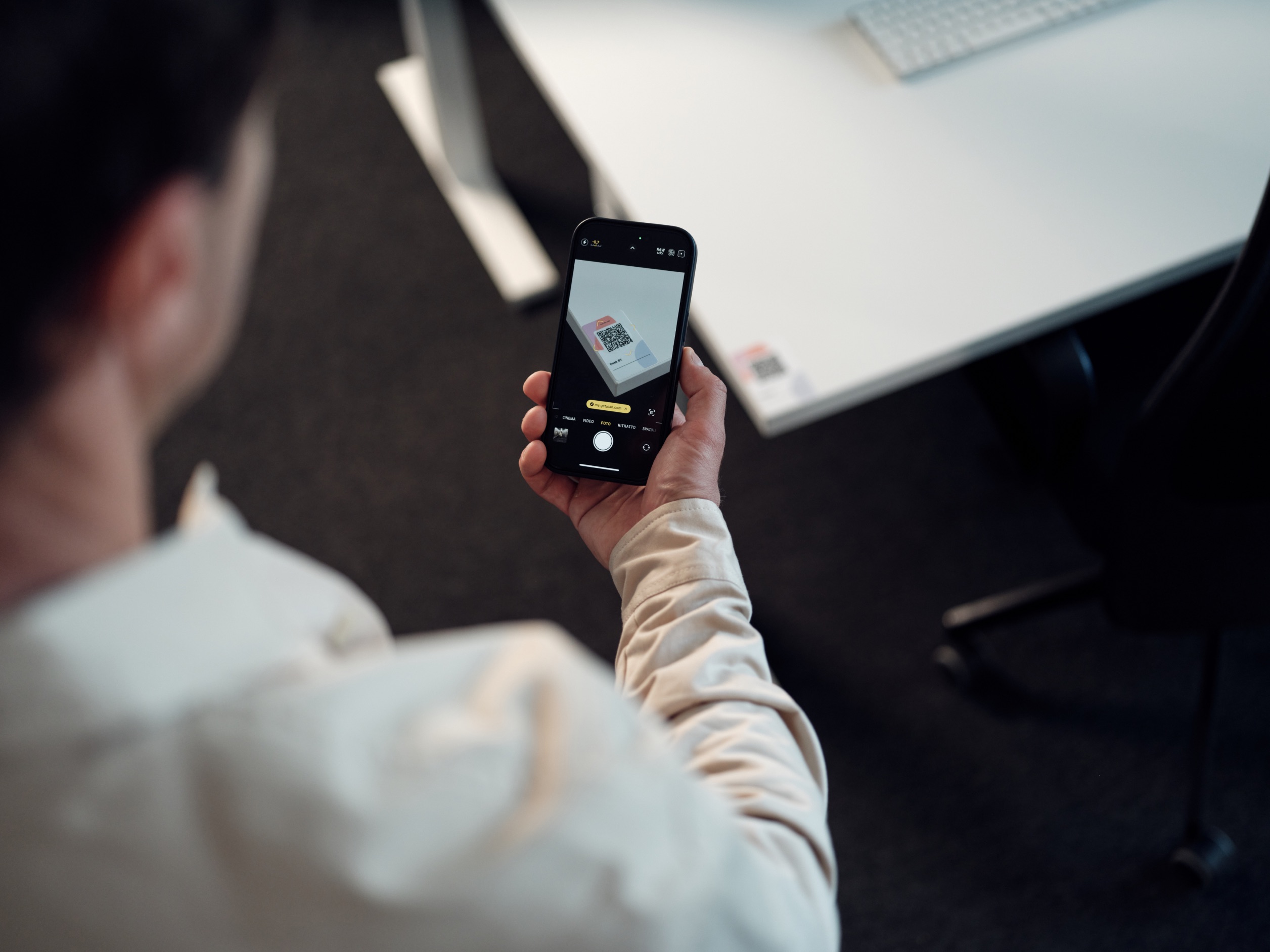
CBRE expects a growing share of organizations to run desk-sharing ratios well above one employee per desk, which only works if bookings are visible and reliable. Joan’s desk booking lets employees reserve from their phone or a display, coordinate in-office days with their team, and check in on arrival, while giving facilities teams accurate data on desk usage.
Room booking that removes meeting friction
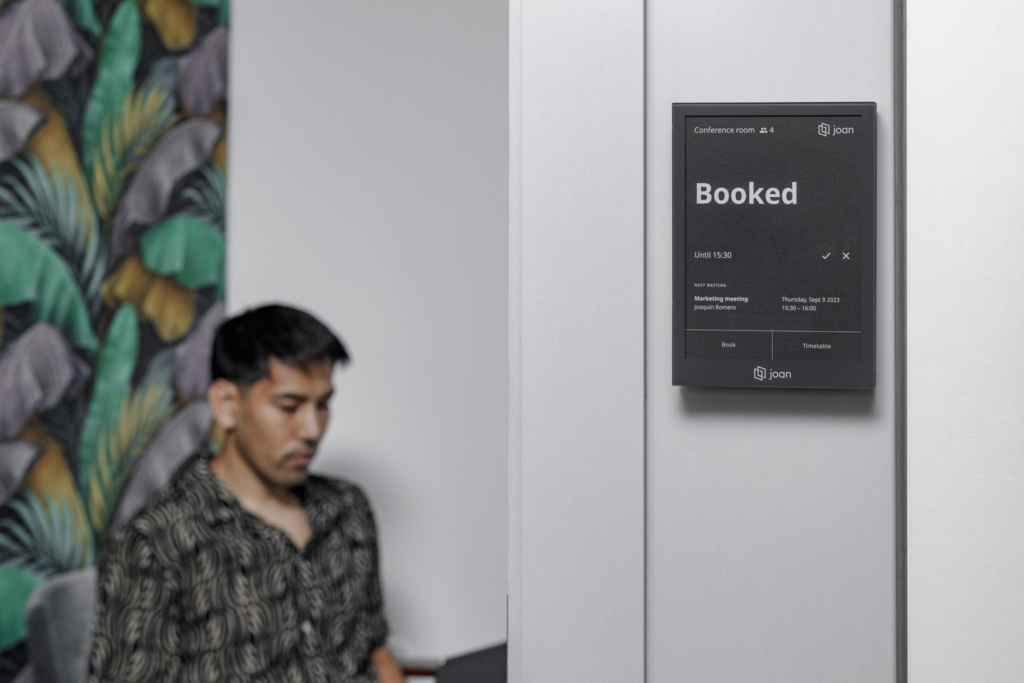
Meetings are a large part of why people come in, so friction around rooms is especially damaging. Effective room booking prevents double-bookings, syncs both ways with Outlook and Google Calendar, and automatically releases rooms on a no-show, so a booked-but-empty room does not lock up valuable space. A display outside each room then answers whether it is free without anyone opening an app, keeping meetings flowing on a crowded mid-week day.
Office space management backed by real data
The financial case for a well-run return to office often lives here. McKinsey and JLL analyses suggest organizations moving to a hybrid model can cut real estate costs meaningfully, in the range of 15% to 30%, through smarter space consolidation. Getting there safely requires knowing how space is actually used. Occupancy and booking analytics show utilization by room type and time of day, and distinguish space that is booked from space that is genuinely used, exactly what facilities and finance teams need before consolidating a floor, adding desks, or renewing a lease.
Smart workplace devices and the at-a-glance office
Software alone leaves gaps that hardware fills. Displays outside meeting rooms and at desks give anyone walking by an instant read on availability, cutting confusion and double-bookings in a way a phone app cannot. Joan’s e-paper devices are wireless and battery-powered for months, so they mount without cabling or an electrician and move easily when a floor is reconfigured. On the software side, the Joan AI Agent lets employees book rooms and desks and get workplace updates directly inside Microsoft Teams, meeting people in the tools they already use. Joan also integrates with Microsoft 365, Google Workspace, Azure AD, and Okta, and extends to visitor management so returning teams can welcome guests with the same modern experience.
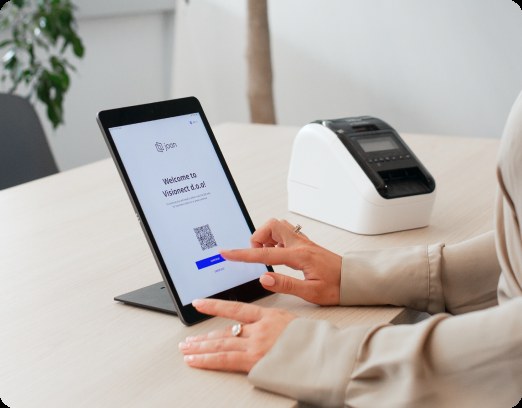
These pieces are most powerful together, which is why many organizations returning to the office favor an all-in-one workplace platform over a patchwork of separate tools. Joan is trusted by organizations including Sportradar, Dell, Microsoft, and Amazon, holds Capterra Leader status, and averages 4.7 stars across major review sites, with transparent, usage-based pricing that includes the full feature set.
Measuring whether your return to office is working
A return to office is not a one-time launch but a program to tune over time, and that requires more than a badge-swipe headcount. The most useful signals combine space data with human feedback: utilization by day and space type, the gap between peak and average occupancy, the no-show rate on booked desks and rooms, and short pulse surveys on how easy the office is to use. Reading them together lets teams act on evidence rather than instinct. If mid-week demand overflows while Fridays sit empty, the fix may be to shift anchor days rather than add space; if rooms show high bookings but low actual use, auto-release recovers capacity without a construction project. Managed this way, workplace management becomes a continuous loop of improving the return to office rather than a one-time policy.
Make your return to office worth the commute
A successful return to office in 2026 is less about counting days in the building and more about building a workplace people are glad to be in: giving employees a real reason to come in, removing the everyday friction that undermines good intentions, and using data to keep the space right-sized as attendance settles. Get those right, and the office stops being a policy to enforce and becomes an asset that supports your hybrid workplace.
See how Joan streamlines hybrid workplace management, from desk and room booking to e-paper devices and occupancy insights, in one platform.
Explore the full platform, review pricing, or start a free trial to make your return to office one employees look forward to. If you have questions about your specific setup? Talk to our team.
Return to Office FAQs
Why are companies returning to the office in 2026?
Most cite collaboration, culture, and engagement. Surveys from Willis Towers Watson show a large majority of employers believe in-person time improves engagement and strengthens culture. In practice, the companies seeing the best results pair those goals with a workplace that is actually designed for hybrid work rather than relying on attendance alone.
How can companies encourage employees to return to the office?
Lead with reasons rather than rules. Build in-office days around team collaboration, mentoring, and culture, and remove the daily friction that makes the office frustrating: make it effortless to book a desk near colleagues, find a meeting room, and see what is free. A modern, well-run office earns attendance far more reliably than a mandate.
What is a return-to-office strategy?
A return-to-office strategy is the plan for how and why employees spend time in a physical workplace within a hybrid model. A strong one defines the in-office rhythm (for example, anchor days), gives people a clear purpose for coming in, equips the office with the technology to support flexible working, and uses real occupancy data to size and shape the space over time.
What does RTO stand for?
RTO stands for return to office. It refers to employees coming back to a physical workplace, usually within a hybrid arrangement that blends in-office and remote days rather than a full five-day return.
How do desk and room booking support a hybrid workplace?
They remove the coordination overhead that flexible work creates. Desk booking ensures employees always have a place to sit and can plan in-office days with their team, while room booking prevents double-bookings and frees unused rooms automatically. Together they let a hybrid workplace absorb uneven, mid-week-heavy attendance without crowding or wasted space, and they generate the utilization data leaders need to manage real estate.