11 Nov 2026
Connected Workplace Guide: Goals and 9 Ideas for 2027
A connected workplace is one where people can find each other, the right space and the right information, whether they’re in the office, at home or somewhere in between. Most teams want that, but few write down what it should look like, so it’s hard to tell whether anything is working. This guide starts with clear connected workplace goals, then gives you nine practical ideas to reach them, grouped into environment, communication and tools.
What is a connected workplace?
A connected workplace links your tools, spaces and people, so everyone can communicate and work together with little friction, whether they’re remote, hybrid or in the office. It covers the technology, and also how teams share information and how the office itself is set up.
Connected workplace goals
Before you add tools, decide what connected should mean for your company. Good goals are specific and easy to measure. Here are six that most hybrid teams share, with a simple way to track each one.
- People can find each other. Anyone can see who’s in the office on a given day. Track how often people use desk booking or the team calendar.
- Rooms are easy to find and book. Fewer double bookings and fewer meetings that start late. Track your no-show rate and booking conflicts.
- Remote colleagues are fully included. Everyone can see, hear and contribute in hybrid meetings. Track it with one short question in your next employee survey.
- Information reaches everyone. Updates land in the same place for every team. Track how many employees say they know where to find company news.
- Fewer tools to switch between. Booking, messaging and visitor check-in work from the tools people already use. Track how many apps an employee needs for a normal office day.
- Higher engagement. People feel connected to their work and their team. Track your engagement survey score over time.
That last goal matters more than it sounds. Gallup’s State of the Global Workplace 2026 report found that only 20% of employees worldwide were engaged at work in 2025, down from 21% the year before. Connection alone won’t change that, but people who can’t find their team or their information rarely feel engaged.
Pick two or three goals, measure where you are today, and check again after three months. For rooms, our guide to meeting room utilization tracking shows what to measure. The nine ideas below are grouped by the part of the workplace they improve.
Building a connected workplace
Let’s explore nine suggestions to create a more connected workplace, focusing on the workplace environment, communication, and technology.
Workplace environment
Whether it’s an inviting physical space or the warm camaraderie, a thriving workspace environment makes everyone feel welcome and motivated to do their best work.
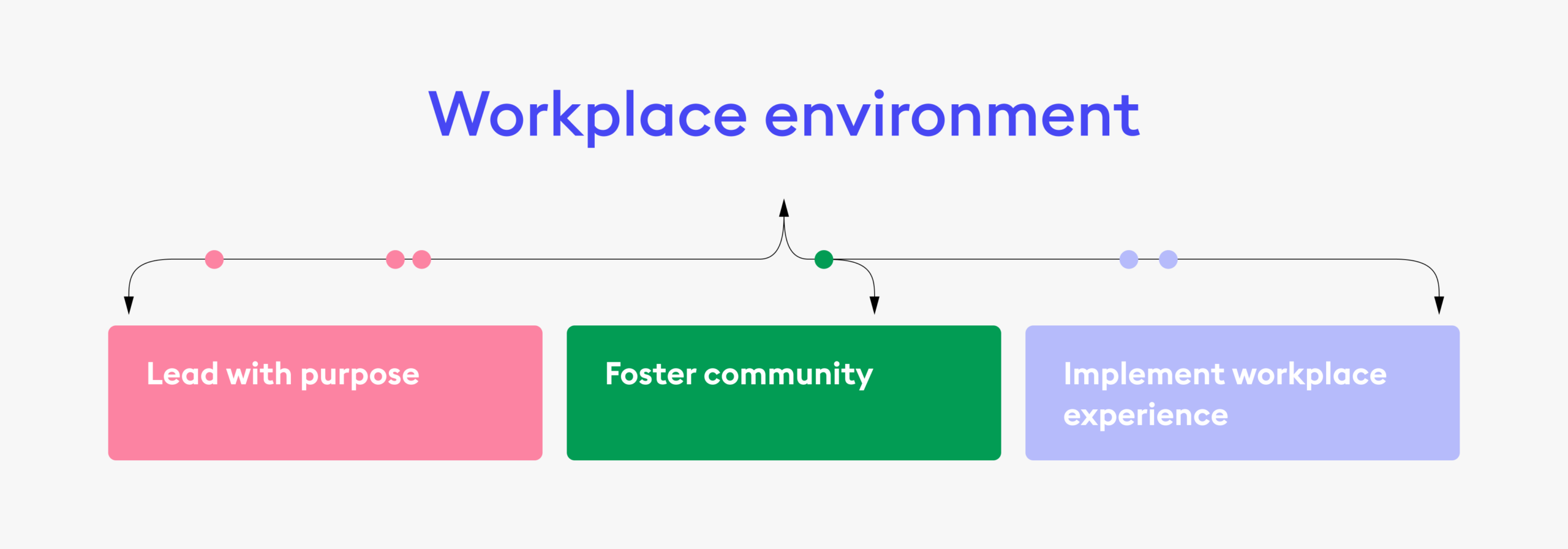
Lead with purpose
At the heart of every successful workplace lies a clear sense of purpose. Establishing and articulating your company’s vision, mission, and values is crucial as they serve as guiding principles for decision-making and behavior across the organization, ultimately shaping the overall employee experience.
Hosting workshops or strategy sessions to define these core elements not only aligns the team but also instills a sense of ownership and direction. When employees understand and resonate with the company’s purpose, they are more likely to feel connected to their work and colleagues.
Build community
Beyond daily tasks and deadlines, a strong company culture is built on shared experiences, mutual respect, and a sense of belonging. Activities like team retreats, company lunches, or even casual coffee breaks help build teamwork and stronger relationships.
For more inspiration on how to foster a community in your workplace, you can check out how Pax8 nurtures its workplace culture, creating a truly epic environment where employees feel valued, supported, and inspired to do their best work.
Implement workplace experience
A well-crafted workplace experience strategy integrates workflows and user-friendly technologies that enable employees to work efficiently and collaboratively. When you invest in a workplace platform like Joan, people spend less time on office logistics and more time on their work.
Joan supports:
- Meeting room scheduling: Keeps your team on point and your meetings on track, eliminating double bookings and confusion.
- Desk booking: Simplified office logistics, ensuring every team member has the space they need, when they need it.
- Parking space booking: Real-time insights and option to reserve specific spots well in advance.
- Visitor management: Guaranteeing a smooth check-in and check-out process.
Enhancing team communication
Teams that communicate effectively are more likely to achieve their goals. Clear, open communication not only aligns everyone toward a common objective but also cultivates an environment where creativity and problem-solving can flourish.
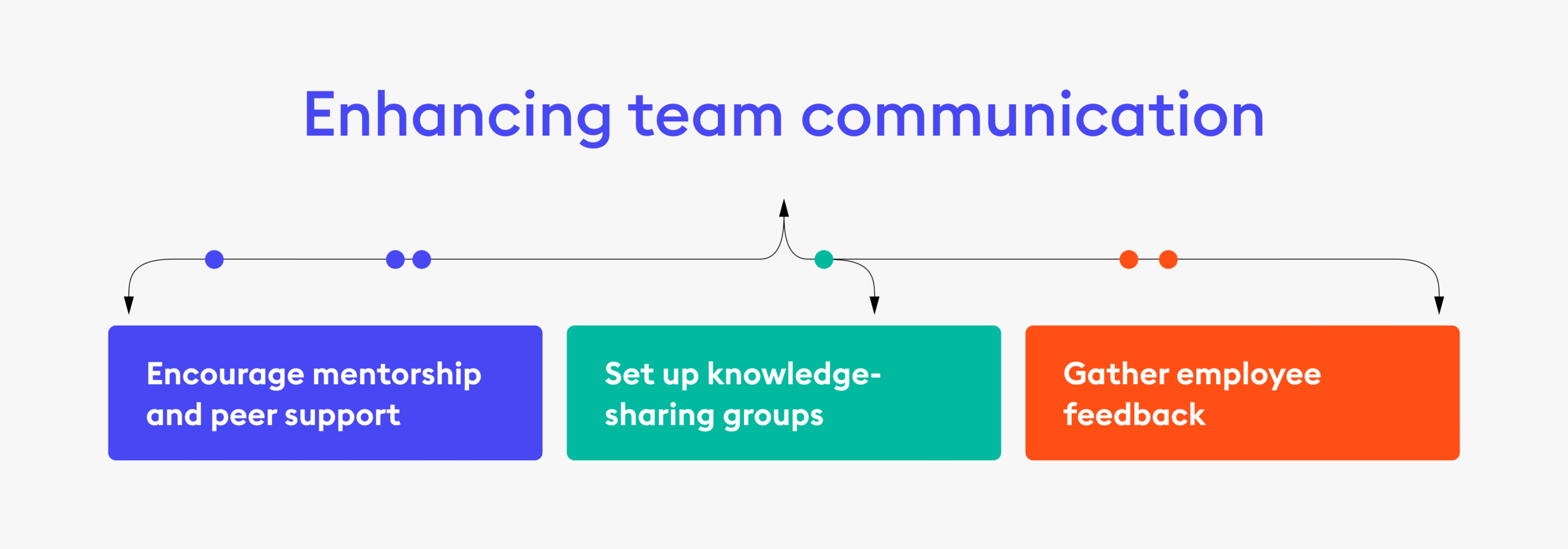
Encourage mentorship and peer support
Implementing a mentorship program or buddy system can significantly enhance internal communication within teams. Pairing seasoned employees with newer team members not only facilitates knowledge sharing but also ensures that every voice is heard and valued.
This approach promotes a culture of continuous learning, mutual support, and professional growth, building stronger bonds and a sense of community.
Set up knowledge-sharing groups
Establishing knowledge-sharing groups allows employees with similar roles or interests to come together to share insights, and discuss challenges. These forums provide opportunities for cross-functional collaboration, innovation, and skill development.
Gather employee feedback
Regularly gathering feedback from employees is essential for assessing the effectiveness of your connection initiatives and identifying areas for improvement. Anonymous surveys or feedback sessions provide valuable insights into employee satisfaction, engagement levels, and perceived barriers to communication.
Leadership can use this feedback to refine strategies, address concerns, and implement meaningful changes that enhance workplace connectivity and employee morale.
Utilizing technology and tools
Workspace technology spans from hardware to cutting-edge software like AI, pivotal for operational efficiency and enabling flexible work arrangements.
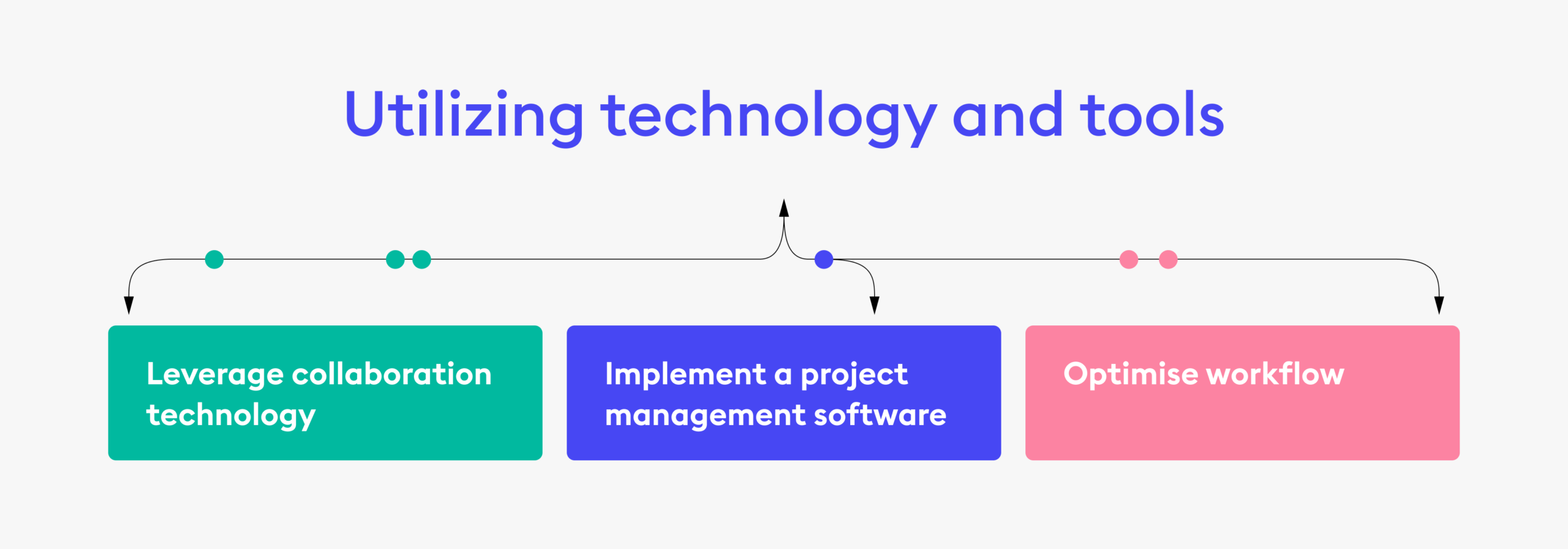
Use collaboration tools
Platforms like Slack, Microsoft Teams, and Zoom support real-time communication, virtual cooperation, and remote teamwork regardless of geographical locations. These tools offer instant messaging, video conferencing, and file sharing, helping teams to operate efficiently and stay connected.
If your team works in Microsoft Teams, Joan AI in Microsoft Teams lets people book rooms and desks, reserve parking and register visitors by chatting, without opening another app.
Implement a project management software
Implementing project management software such as Asana, Trello, or Monday.com centralizes project workflows, enhances task visibility, and improves team coordination. These tools provide transparent project timelines, task assignments, and progress tracking features, ensuring that everyone is aligned with project goals and deadlines.
Automate routine work
Automating repetitive tasks plays a crucial role in enhancing connectivity within organizations. By reducing manual intervention in routine processes such as data entry, reporting, and scheduling, automation minimizes errors and friction, thereby promoting smoother collaboration across teams.
Joan offers advanced workplace experience solutions with easy-to-use tools, so resources are used well, work isn’t interrupted, and people can work together without friction.

Benefits of a connected workplace
A connected workplace offers numerous benefits, including: Improved productivity, enhanced collaboration, stronger organizational culture, and increased employee satisfaction.
By integrating technology, encouraging open communication, and nurturing a supportive work environment, organizations can create a cohesive and agile workforce. We’ve written a comprehensive blog exploring the origin and benefits of a connected workplace that you can dive into here.
Keep your connected workplace working
Implementing tools and strategies is only the beginning; it’s the ongoing commitment that truly makes a difference. Building genuine connection requires that every employee feels valued and supported, beyond the frameworks and technologies you put in place. Ultimately, taking care of your employees is key to making these initiatives successful.
Contact our sales team today to explore how our innovative solutions can cultivate your connected workplace environment.
Frequently asked questions
What are the goals of a connected workplace?
The most common goals are making it easy to find people and rooms, including remote colleagues in meetings, getting information to everyone, cutting the number of tools people switch between, and raising engagement. Pick two or three and measure them.
What is a connected workplace?
A connected workplace links your tools, spaces and people, so everyone can communicate and work together with little friction, whether they’re remote, hybrid or in the office.
How do you measure a connected workplace?
Use numbers you already have, such as room no-show rates, desk and room booking use, and engagement survey scores. Add one or two survey questions about how easy it is to find people and information, and compare every quarter.
Which tools does a connected workplace need?
A messaging and video platform such as Microsoft Teams or Slack, a project management tool, and a workplace platform for booking rooms and desks and checking in visitors. Joan covers the booking side and works inside Microsoft Teams with Joan AI.