
Real estate agent office layout for agents
Fifteen assigned desks. Three agents in the office. Sarah arrives between showings and cannot find a place to sit because every desk belongs to someone who will not appear until Thursday. The conference room she needs got double-booked. Her client arrives in twenty minutes.
Traditional office design assumes people show up and work for eight hours in the same spot. Real estate operates differently.
Agents drop into the office for focused work between appointments, host clients making significant financial decisions, and need immediate access to professional space without advance planning.
The best real estate agent office layout acknowledges this reality instead of fighting it.
Quickly jump to:
What makes real estate agent office layouts different
A real estate agent office layout is a workspace design that supports mobile agents who spend most of their time in the field rather than at a desk. Unlike traditional offices with assigned workstations, these layouts prioritize flexible touchdown spaces, multiple client meeting rooms, and professional presentation areas.
According to the National Association of Realtors, 88% of real estate agents work as independent contractors. This statistic has direct implications for how space gets used. These agents schedule their days around client availability, which means evening showings, weekend open houses, and appointment blocks that shift constantly based on buyer and seller needs.
3 Essential zones in functional real estate agent office layouts
Effective real estate office design layout divides space into distinct functional zones that support different activities throughout the day.
1. Client-facing zones
Professional reception areas need clear sightlines and self-service check-in options that work when front desk staff handle other tasks.
Multiple small conference rooms matter more than one large room. When three agents need client meetings simultaneously, the layout accommodates everyone without forcing reschedules.
2. Agent work zones
Hot desking provides first-come, first-served workspace with power access and monitor connections. Agents grab any available spot for focused work, then free it up when they leave.
Desk hoteling works better for real estate offices. Agents reserve specific desks in advance through a desk booking system, guaranteeing workspace when they arrive. No searching for available spots during peak hours. No territorial conflicts over preferred locations. The reservation system also provides visibility into office occupancy patterns, helping brokerages optimize space allocation based on actual usage data rather than assumptions.
Quick touchdown stations with countertops, stools, and power outlets work for brief visits between showings. Private phone booths handle sensitive client calls without broadcasting confidential information across open workspace.
3. Operational zones
Lockable storage keeps signage, lockboxes, and staging materials secure with clear checkout systems.
Marketing prep areas include large-format printers and assembly space for creating listing presentations.
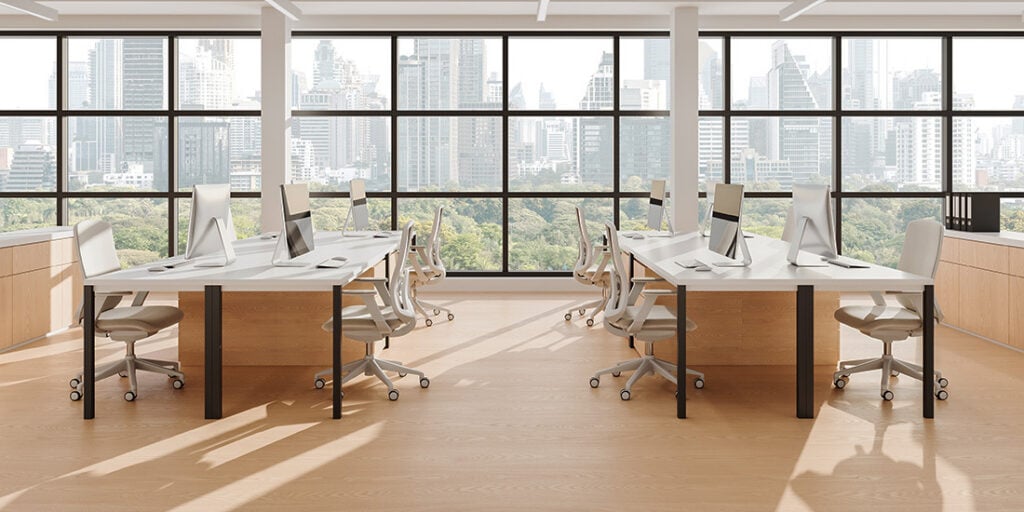
Real estate office layout ideas for agents
The best layouts acknowledge that agents work differently than traditional office employees. These configurations support mobile work patterns while maintaining professional client experiences.
Activity-based zones replace assigned seating
Divide the office into purpose-specific areas rather than rows of identical desks. Create distinct zones for focused work, client meetings, collaboration, and administrative tasks. Agents choose the space that matches their immediate need instead of claiming territory they rarely use.
Neighborhood clustering
Group workspace by team or specialty rather than spreading agents randomly. Residential teams cluster together, commercial agents share adjacent space, and luxury specialists coordinate nearby. This modern real estate office layout for agents supports organic collaboration without forcing rigid assigned seating.
The hybrid approach
Combine permanent desks for top producers or team leaders with flexible workspace for everyone else. Senior agents who close high volumes and mentor others get dedicated space. Newer agents and part-time team members share hot desks. This real estate office layout idea for agents balances stability with flexibility.
Client-first configuration
Position all client-facing spaces near the entrance with agent workspace behind. Clients never walk through cluttered back offices to reach conference rooms. This layout creates professional first impressions while keeping operational areas separate from presentation spaces.

The infrastructure behind functional real estate agent office layouts
The best real estate office layout ideas for agents fall apart without systems managing how space gets used. Physical design creates potential. Coordination systems deliver results.
Room booking stops the apology tour
Agents see real-time availability from their phones and reserve space with one tap. No double-bookings. No last-minute scrambles for alternative meeting spaces. The system syncs with calendars automatically so everyone knows which rooms are occupied.
Desk booking ends territorial disputes
Agents reserve desks when needed. The system shows exactly what sits available. Nobody arrives to find their expected workspace occupied by someone else’s laptop and coffee cup.
Visitor management runs reception without constant supervision
Clients check themselves in using a tablet. The system automatically notifies the right agent when their visitor arrives. The process feels seamless while the front desk staff handle other responsibilities.
Digital signage prevents the wandering client
Clear wayfinding guides clients from lobby to conference room without asking directions or uncertainly checking door nameplates.
Joan Workplace coordinates meeting room booking, desk reservations, visitor management, parking and assets, and workplace digital signage from one platform. Built-in analytics track space utilization and booking patterns so brokerages can continuously optimize how the office operates.
When layout matches work patterns and systems remove friction, the workspace becomes a competitive advantage. Agents focus on clients. Clients experience professionalism that matches promised service levels.
Connect with Joan Workplace specialists to see how real estate brokerages turn office coordination into measurable results.
About the author
